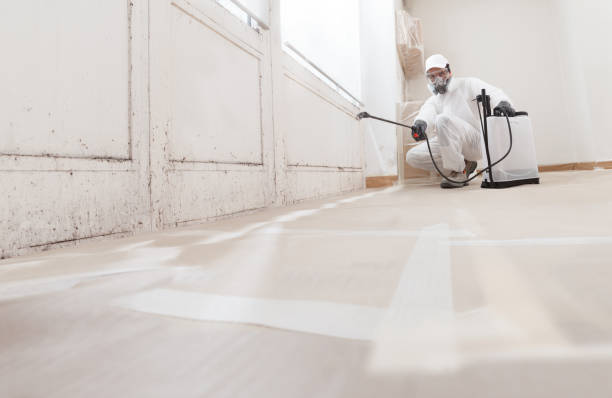
Six focused basement mold services for the specific conditions found below grade.
🔍
Basement Mold Assessment & Moisture Source Investigation
Comprehensive assessment: block wall moisture readings, slab vapor check, RH logging, thermal camera sweep for hidden moisture. Visual growth mapping with photos. Written findings before scope proposal.
🏗
Drywall & Framing Mold Removal
Basement drywall and wood framing with mold growth — whether from a water event or chronic humidity — must be removed and replaced. Drywall on below-grade exterior walls is particularly vulnerable because it can wick moisture from the block wall behind it. We remove contaminated drywall and framing, treat remaining structural surfaces, and address the moisture pathway before recommending how to finish the space.
🏔
Concrete Block Wall & Slab Mold Treatment
Mold on poured concrete or block basement walls is common in Grapevine, TX homes with below-grade moisture infiltration. Concrete surfaces are wire-brushed to remove loose growth, treated with penetrating EPA-registered fungicide, and evaluated for waterproofing needs. Efflorescence and active moisture wicking are documented for the waterproofing recommendation.
💨
Post-Flood Emergency Mold Remediation
24/7 emergency response to basement flooding. Water extraction, psychrometric drying assessment, structural drying setup, and mold remediation of affected materials after the drying phase.
🔥
Basement Insulation Removal & Replacement
Fiberglass batt insulation in basement walls — common in Grapevine, TX finished basements — acts as a moisture reservoir when wall assemblies experience condensation or infiltration. Wet or mold-contaminated insulation must be removed and replaced, typically with closed-cell spray foam or rigid foam that doesn't support moisture migration.
📄
Dehumidifier Sizing & Installation Recommendations
After Basement Mold Remediation, chronic basement humidity must be controlled to prevent recurrence. We size whole-basement dehumidifiers based on square footage, ceiling height, moisture load, and existing HVAC capacity — and specify drain-line routing so the unit doesn't require manual emptying. Where HVAC-integrated dehumidification is appropriate, we document that recommendation as well.